The Future of ChatGPT: OpenAI's Super App Vision
OpenAI is transforming ChatGPT into a powerful AI super app. Learn the strategy, features, benefits, risks, and what it means for users.

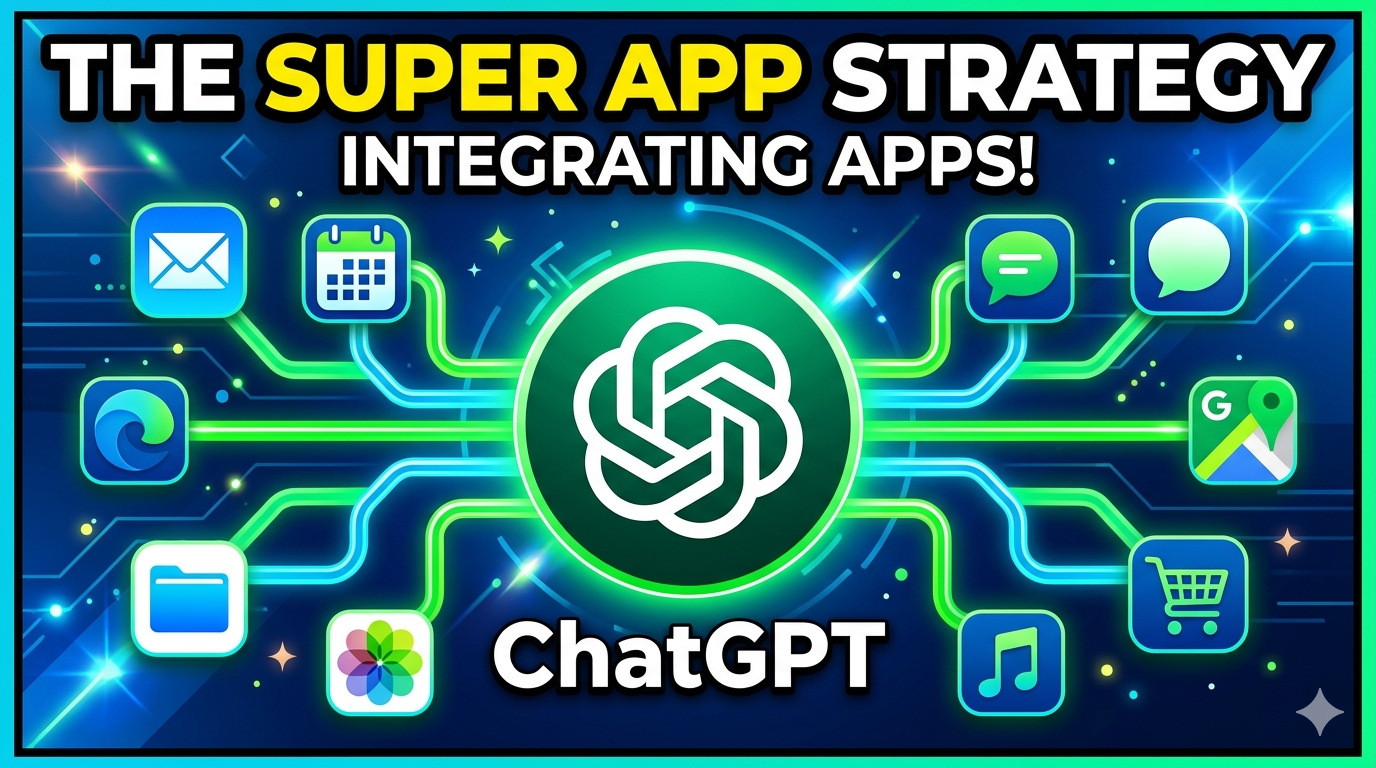
Why OpenAI Is Turning ChatGPT Into a Super App
Artificial intelligence has already changed how millions of people search for information, write content, generate code, and solve everyday problems. But OpenAI's ambitions appear to go far beyond creating the world's most popular AI assistant.
The company is steadily transforming ChatGPT from a simple conversational tool into a comprehensive AI platform that could eventually replace dozens of standalone applications.
Many industry observers now describe this vision as a "super app" strategy—a model that has been highly successful in Asia through platforms like WeChat, where users can access multiple services from a single interface.
For OpenAI, the goal appears clear: make ChatGPT the primary destination for digital work and productivity.
What Is a Super App?
A super app combines multiple digital services into a single platform.
Instead of switching between:
Search engines
Productivity software
Coding tools
Research platforms
Automation services
Personal assistants
Users interact with one application that handles everything.
Examples include:
WeChat
Grab
Alipay
These platforms evolved from single-purpose apps into ecosystems that support numerous daily activities.
OpenAI appears to be applying a similar concept to AI.
How ChatGPT Has Already Evolved
The transformation is already underway.
When ChatGPT launched in late 2022, it was primarily a conversational AI chatbot.
Today's ChatGPT includes:
Advanced Search
Users can search the web directly inside ChatGPT.
This reduces the need to leave the platform to find information.
Deep Research
Complex research workflows can now be completed with AI assistance.
Instead of manually reviewing dozens of sources, users receive structured reports and summaries.
Coding Capabilities
ChatGPT has become a serious development tool.
Developers use it for:
Code generation
Debugging
Documentation
Refactoring
Software architecture planning
Image Generation
Users can create graphics, illustrations, marketing assets, and concept art without third-party software.
Voice Interaction
Real-time voice conversations bring ChatGPT closer to a true digital assistant.
Custom GPTs
Organizations and individuals can create specialized AI assistants for specific tasks.
Together, these features represent far more than a traditional chatbot.
Why OpenAI Is Pursuing the Super App Strategy
Several factors likely drive OpenAI's long-term vision.
1. Increasing User Retention
The more tasks users complete within ChatGPT, the less likely they are to leave for competing services.
Every additional capability strengthens platform loyalty.
2. Expanding Revenue Opportunities
Subscription revenue alone may not be enough to support future AI infrastructure costs.
A broader platform creates opportunities through:
Enterprise solutions
Agent services
Developer tools
Productivity features
API ecosystems
3. Competing With Tech Giants
OpenAI now competes directly with:
Google
Microsoft
Apple
Amazon
Meta
Each company controls large ecosystems.
Creating a super app helps OpenAI establish its own ecosystem rather than remaining a standalone AI provider.
4. Building the Future User Interface
Many analysts believe AI assistants will become the next major computing interface.
Instead of navigating apps manually, users will simply tell AI what they want.
The AI handles everything behind the scenes.
If that future arrives, ChatGPT could become the operating layer between users and software.
The Role of AI Agents
AI agents may be the most important piece of OpenAI's strategy.
Traditional chatbots respond to requests.
Agents take action.
Future ChatGPT agents could:
Schedule meetings
Conduct research
Manage emails
Build software
Analyze data
Generate reports
Coordinate workflows
Rather than assisting with tasks, they complete tasks independently.
This shift could dramatically increase the platform's value.
How This Could Impact the SaaS Industry
The rise of AI-powered super apps presents a significant challenge to traditional software companies.
Many SaaS products exist because they simplify specific tasks.
If ChatGPT can perform those tasks directly, users may question the need for additional tools.
Industries that could experience disruption include:
Content Creation
AI already generates articles, summaries, social posts, and marketing copy.
Customer Support
AI agents increasingly handle support requests without human intervention.
Research Platforms
ChatGPT can gather, organize, and summarize information from multiple sources.
Development Tools
AI coding assistants continue reducing repetitive programming work.
The biggest winners may be companies that integrate with AI ecosystems rather than compete against them.
Potential Risks and Challenges
The super app vision is not guaranteed to succeed.
Several obstacles remain.
Trust and Reliability
Users must trust AI systems to complete important tasks accurately.
Mistakes could damage adoption.
Regulation
Governments worldwide continue evaluating AI regulations.
Future rules may affect how AI agents operate.
Competition
Google, Apple, Microsoft, Anthropic, and Meta are pursuing similar goals.
The race to become the dominant AI platform is only beginning.
Infrastructure Costs
Running advanced AI models requires enormous computing resources.
Maintaining profitability while expanding services remains a challenge.
Expert Analysis
OpenAI's strategy reflects a broader shift occurring across the technology industry.
The next major platform battle may not be smartphones, operating systems, or social networks.
It may be AI ecosystems.
Companies are increasingly competing to become the primary interface through which users access information and complete digital tasks.
ChatGPT's rapid expansion suggests OpenAI believes the future belongs to AI-first platforms rather than traditional applications.
If successful, ChatGPT could evolve into one of the most important technology platforms of the decade.
Future Outlook
Over the next several years, we can expect ChatGPT to expand into areas such as:
Advanced AI agents
Enterprise workflow automation
Personal productivity management
Software development environments
Business operations
Multi-agent collaboration
The platform may gradually become less of a chatbot and more of an intelligent operating system for knowledge work.
Whether OpenAI achieves that vision remains uncertain.
What is clear, however, is that ChatGPT's evolution is only beginning.
Frequently Asked Questions
What is the ChatGPT Super App?
The ChatGPT Super App refers to OpenAI's apparent strategy of expanding ChatGPT into a platform that combines AI assistance, search, coding, research, automation, and agent capabilities.
Why does OpenAI want ChatGPT to become a super app?
The strategy increases user retention, expands revenue opportunities, and positions ChatGPT as a central platform in the future AI ecosystem.
What are AI agents?
AI agents are systems capable of performing tasks autonomously rather than simply responding to user prompts.
Will ChatGPT replace traditional software?
Not entirely. However, AI-powered workflows may reduce the need for some standalone applications.
Who are OpenAI's biggest competitors?
Google, Microsoft, Apple, Anthropic, Meta, and Amazon are among the major competitors building AI ecosystems.