Anthropic Launches $200 Million Initiative to Study AI's Impact on Jobs: What It Means for Workers and Businesses
Anthropic has announced a $200 million research initiative focused on understanding how artificial intelligence will affect jobs, industries, and economic systems. The project aims to provide data-driven insights into workforce transformation, helping policymakers, businesses, and workers prepare for an AI-driven future.

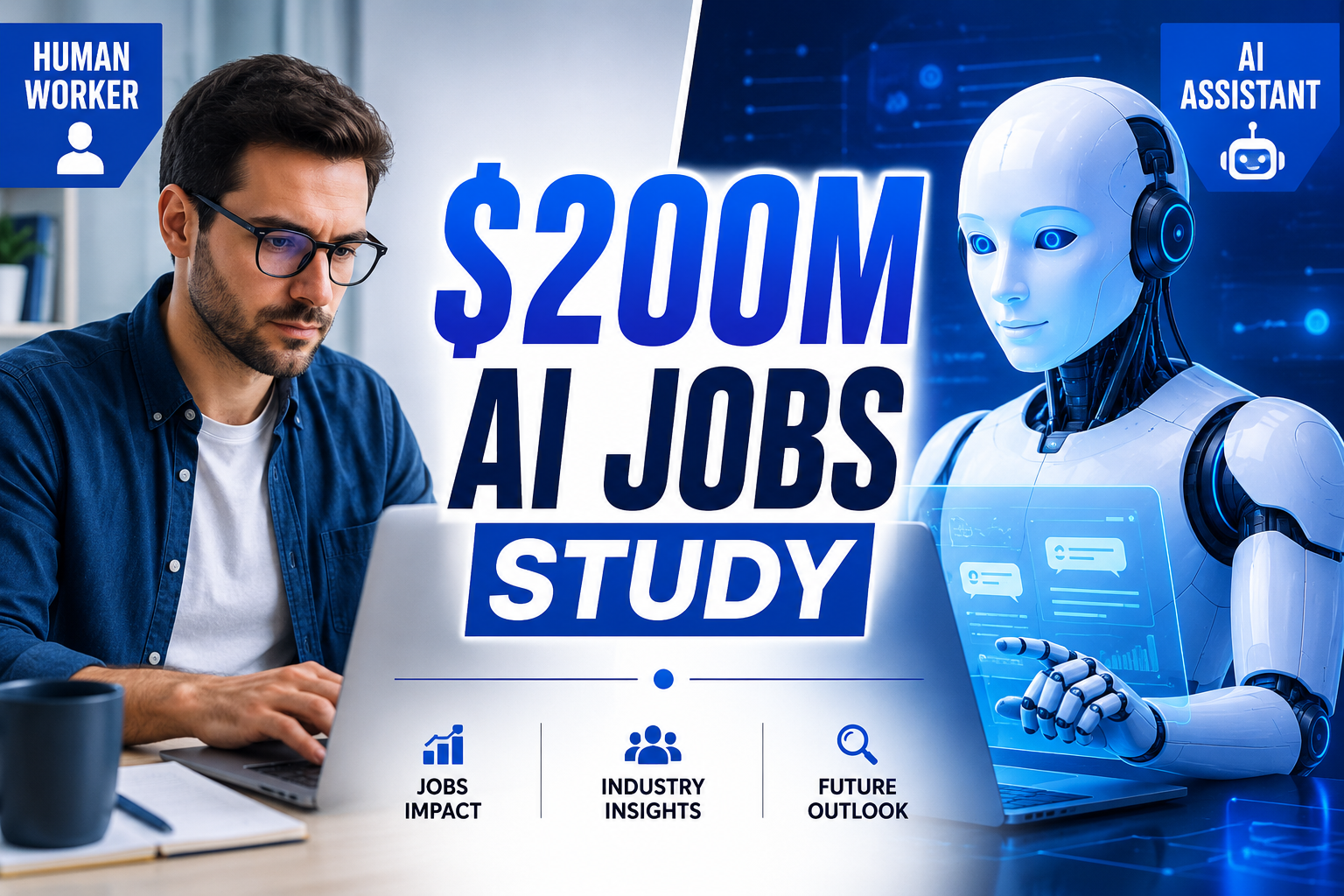
Anthropic Launches $200 Million Initiative to Study AI's Impact on Jobs: What It Means for Workers and Businesses
Artificial intelligence is rapidly transforming industries across the globe. From software development and customer service to healthcare and finance, AI-powered tools are becoming an integral part of daily business operations. While these technologies promise greater productivity and innovation, they also raise important questions about employment, workforce adaptation, and economic stability.
Recognizing the significance of these challenges, AI company Anthropic has announced a major $200 million research initiative dedicated to studying the impact of artificial intelligence on jobs and the broader economy. The program aims to provide evidence-based insights into how AI technologies may reshape work in the coming years and help stakeholders make informed decisions.
As AI adoption accelerates, this initiative could become one of the most influential research efforts focused on understanding the future of work.
Why Anthropic Is Investing in AI Employment Research
Artificial intelligence has moved beyond experimental use cases and is now being deployed across enterprises at scale. Advanced AI systems can write code, generate content, analyze data, automate workflows, and assist with complex decision-making.
These capabilities have sparked both excitement and concern.
Supporters argue that AI can boost productivity, create new industries, and enhance human capabilities. Critics worry that automation may displace workers, widen skill gaps, and increase economic inequality.
Anthropic's new initiative seeks to move the conversation beyond speculation by funding comprehensive research into how AI is affecting jobs, industries, wages, and workforce structures.
The company's goal is to provide objective data that can guide policymakers, educators, business leaders, and workers as they navigate technological change.
What the $200 Million Initiative Will Focus On
The research program is expected to explore multiple dimensions of AI's influence on employment.
Key Research Areas
1. Job Transformation
Rather than focusing solely on job replacement, researchers will examine how AI changes the nature of work.
Questions include:
Which tasks are becoming automated?
Which skills are becoming more valuable?
How are employee roles evolving?
Many experts believe AI will transform jobs before it completely replaces them.
2. Industry-Level Impact
Different sectors are likely to experience AI adoption at different speeds.
Research may analyze industries such as:
Software development
Healthcare
Finance
Legal services
Education
Manufacturing
Retail
Customer support
Understanding these sector-specific trends can help organizations prepare more effectively.
3. Workforce Reskilling
One of the biggest challenges of AI adoption is ensuring workers have access to relevant skills.
The initiative is expected to evaluate:
Emerging job categories
High-demand AI skills
Effective training programs
Workforce transition strategies
Reskilling may become one of the most important priorities for governments and businesses over the next decade.
4. Economic Consequences
Researchers will also examine broader economic outcomes.
Potential focus areas include:
Productivity growth
Wage changes
Labor market shifts
Business competitiveness
Economic inequality
These findings could influence future workforce and economic policies worldwide.
Why This Research Matters
The debate surrounding AI and employment has often been driven by predictions rather than measurable evidence.
Some reports suggest AI could automate significant portions of existing jobs, while others argue that technology historically creates more opportunities than it eliminates.
The reality is likely more complex.
Certain tasks may become automated, while entirely new roles emerge in areas such as:
AI operations
AI governance
Prompt engineering
AI safety
Data quality management
Human-AI collaboration
Anthropic's initiative could help bridge the gap between theory and reality by providing high-quality research grounded in real-world data.
The Growing Role of Responsible AI Development
Anthropic has positioned itself as one of the leading companies focused on AI safety and responsible development.
The company is known for developing the Claude family of AI models and advocating for greater transparency in AI deployment.
By investing heavily in workforce research, Anthropic appears to be expanding its commitment beyond technical safety to include social and economic impacts.
This approach reflects a growing recognition across the AI industry that technological progress should be accompanied by thoughtful planning for its societal consequences.
What Businesses Can Learn from the Initiative
Organizations adopting AI technologies face increasing pressure to balance innovation with workforce development.
Research from the initiative could help businesses:
Identify Automation Opportunities
Companies may gain clearer insights into which tasks are suitable for AI augmentation.
Improve Workforce Planning
Understanding future skill requirements can help organizations develop training programs before talent shortages emerge.
Enhance Productivity
Businesses can learn how to combine human expertise with AI systems more effectively.
Reduce Workforce Disruption
Evidence-based strategies may help companies implement AI while minimizing negative impacts on employees.
What It Means for Employees
For workers, the initiative highlights an important reality: adaptability will be critical in the AI era.
Rather than viewing AI solely as a threat, many professionals may benefit from learning how to work alongside intelligent systems.
Key areas of focus include:
AI literacy
Digital skills
Critical thinking
Data analysis
Human-centered problem solving
Communication and leadership
These skills are likely to remain valuable even as automation becomes more sophisticated.
Challenges Ahead
While the initiative is ambitious, predicting AI's long-term impact remains difficult.
Several factors could influence outcomes:
Regulatory policies
AI adoption rates
Economic conditions
Industry-specific needs
Educational preparedness
Technological breakthroughs
As a result, ongoing research will be essential for understanding how these variables interact over time.
Key Takeaways
Anthropic has launched a $200 million initiative to study AI's impact on jobs and the economy.
The project aims to provide evidence-based insights into workforce transformation.
Research will focus on job evolution, reskilling, industry impact, and economic outcomes.
Businesses can use findings to improve workforce planning and AI adoption strategies.
Workers may benefit from developing AI-related skills and adaptability.
The initiative reflects growing industry interest in responsible AI development.
Future Outlook
Artificial intelligence is expected to remain one of the most transformative technologies of the coming decade. However, the success of AI adoption will depend not only on technical innovation but also on society's ability to manage workforce transitions effectively.
Anthropic's $200 million research initiative represents a significant step toward understanding these challenges. By bringing together researchers, economists, policymakers, and industry leaders, the program could help shape a more informed and balanced approach to the future of work.
The findings may influence everything from corporate hiring strategies and educational programs to government policies and labor market reforms.
As AI continues to evolve, understanding its real-world impact on employment will become increasingly important for businesses, workers, and society as a whole.
Conclusion
Anthropic's decision to invest $200 million in studying AI's impact on jobs demonstrates the growing importance of workforce-focused AI research. Rather than relying on assumptions, the initiative aims to generate practical insights into how artificial intelligence is changing work, skills, and economic structures.
For businesses, the research could provide valuable guidance for responsible AI adoption. For workers, it offers an opportunity to better understand the skills and strategies needed to thrive in an increasingly AI-driven economy.
The future of work is being shaped today, and initiatives like this may play a critical role in ensuring that technological progress benefits both organizations and individuals.
13. FAQs
1. What is Anthropic's $200 million research initiative?
It is a large-scale research program focused on studying how artificial intelligence affects jobs, industries, and economic systems.
2. Why is Anthropic investing in workforce research?
The company aims to provide evidence-based insights that help society prepare for AI-driven changes in employment and productivity.
3. Will AI replace human jobs?
AI may automate certain tasks, but many experts believe it will also create new job categories and transform existing roles.
4. Which industries could be most affected by AI?
Software development, customer service, finance, healthcare, education, manufacturing, and legal services are among the sectors expected to see significant AI adoption.
5. How can workers prepare for AI-driven changes?
Developing AI literacy, digital skills, critical thinking, communication, and problem-solving abilities can help workers remain competitive.
6. What benefits can businesses gain from this research?
Businesses may gain insights into workforce planning, employee training, productivity improvement, and responsible AI deployment.
7. How does this initiative relate to Claude AI?
Claude is Anthropic's family of AI models. The initiative focuses on the broader societal and economic effects of AI technologies, including systems like Claude.
8. Why is understanding AI's job impact important?
Understanding AI's effects can help policymakers, businesses, and workers make informed decisions about education, employment, and economic policy.