AI Agents Are Replacing Apps: The Biggest Shift in Computing Since Smartphones
AI agents are evolving beyond chatbots and may replace traditional apps. Here's how agentic AI could transform computing forever.

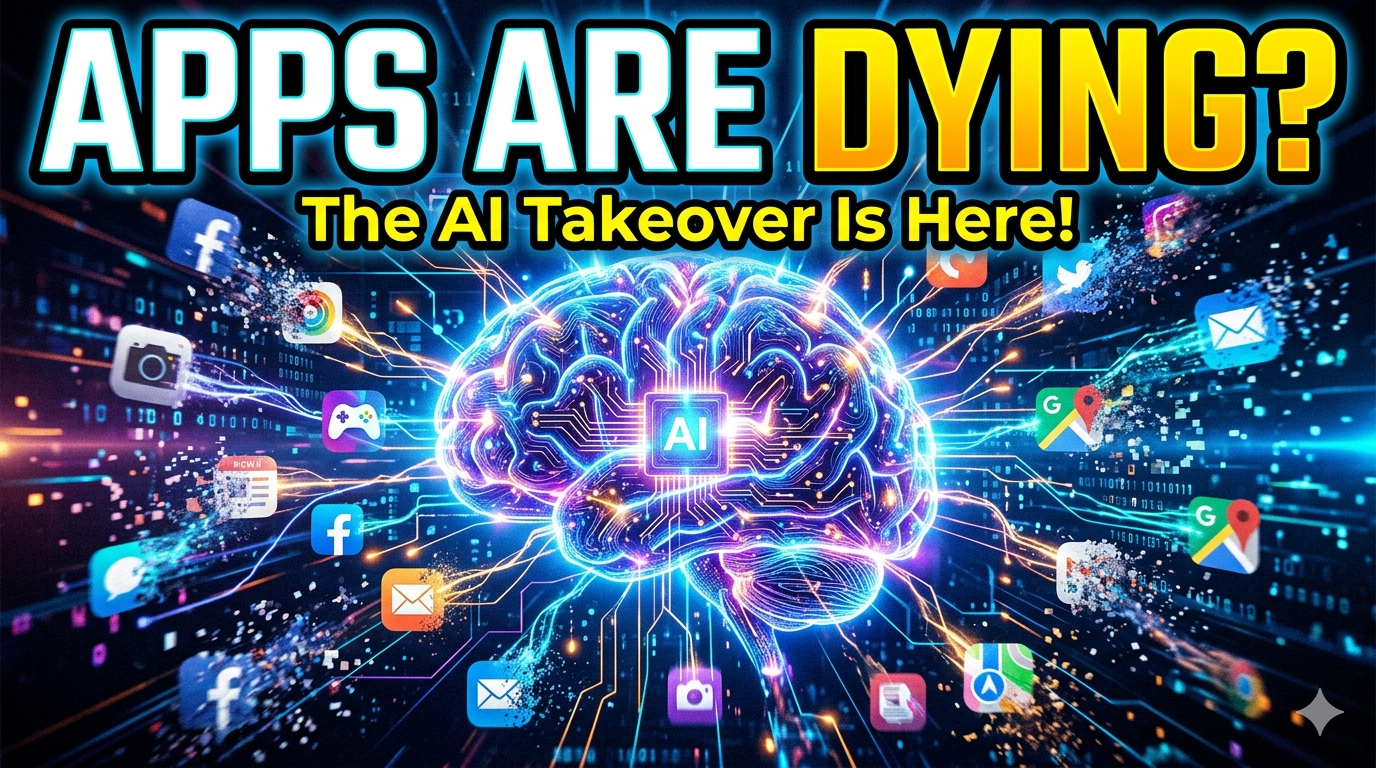
AI Agents Are Replacing Apps: The Biggest Shift in Computing Since Smartphones
For nearly two decades, apps have defined how we interact with technology.
Need transportation? Open an app.
Need food delivery? Open an app.
Need to manage your finances, communicate with colleagues, edit documents, or book a flight? There is an app for that.
But a new generation of artificial intelligence systems is challenging that model entirely.
Technology companies including OpenAI, Google, Microsoft, Anthropic, and Meta are investing heavily in AI agents—systems designed not just to answer questions, but to perform tasks on behalf of users.
If current trends continue, the future of computing may involve fewer apps and more autonomous AI agents that understand goals, make decisions, and execute actions across multiple services.
The shift could become one of the most significant changes in computing since the introduction of smartphones.
What Are AI Agents?
An AI agent is a software system capable of understanding objectives, planning actions, using tools, and completing tasks with minimal human involvement.
Unlike traditional chatbots that respond to prompts one step at a time, agents can work through multi-step processes independently.
For example, instead of asking:
"What are the cheapest flights to Singapore?"
You could tell an AI agent:
"Plan my trip to Singapore next month, find the best flights, book a hotel near the conference venue, and add everything to my calendar."
The agent would then coordinate multiple services to complete the request.
This goal-oriented approach is fundamentally different from how software has worked for decades.
Why Traditional Apps May Be Losing Their Importance
Apps were designed around specific functions.
Email apps manage email.
Banking apps manage banking.
Travel apps manage travel.
Users constantly switch between interfaces to complete even simple workflows.
AI agents change this model.
Instead of navigating multiple applications, users simply describe what they want to accomplish.
The agent determines which tools and services are needed and handles the execution.
In this model, the interface becomes less important than the outcome.
The user interacts with a single intelligent layer rather than dozens of separate apps.
Big Tech Is Building Toward an Agent-First Future
The race toward agentic computing is accelerating.
Microsoft recently showcased Project Solara, a platform designed around AI-native experiences and intelligent agents.
Google is expanding Gemini into a broader personal AI platform capable of handling increasingly complex tasks.
OpenAI continues to develop agent capabilities that move beyond conversation into execution.
Anthropic has introduced systems designed to interact with tools, software, and external environments.
Across the industry, the message is becoming clear:
The future is not just smarter chatbots.
The future is software that acts.
Key Features Driving the AI Agent Revolution
1. Goal-Based Interaction
Users describe outcomes instead of issuing detailed instructions.
The AI figures out how to reach the goal.
2. Multi-Step Reasoning
Agents can break complex tasks into smaller steps and execute them sequentially.
3. Tool Usage
Modern agents can interact with databases, calendars, email systems, browsers, APIs, and productivity software.
4. Persistent Memory
Future agents will remember user preferences, habits, projects, and workflows.
5. Cross-Platform Operation
Instead of living inside a single app, agents work across multiple services simultaneously.
How AI Agents Could Transform Everyday Life
Personal Productivity
Imagine telling an AI:
"Prepare my week."
The agent could:
Review your calendar
Prioritize tasks
Schedule meetings
Draft emails
Create reminders
All automatically.
Business Operations
Organizations are increasingly deploying AI agents to:
Handle customer support
Analyze business data
Generate reports
Manage workflows
Automate repetitive tasks
Software Development
AI coding agents are already helping developers:
Write code
Debug applications
Generate documentation
Review pull requests
Build prototypes
Many experts believe software engineering will become one of the earliest industries transformed by autonomous agents.
Benefits of an Agent-Driven Future
Increased Productivity
Users spend less time managing software and more time focusing on outcomes.
Reduced Complexity
One intelligent assistant replaces dozens of disconnected interfaces.
Better User Experience
Natural language becomes the primary interface.
Greater Automation
Routine tasks happen automatically in the background.
Personalized Computing
Agents learn user preferences and adapt over time.
Challenges and Drawbacks
Despite the excitement, significant challenges remain.
Reliability
Agents still make mistakes.
A failed flight booking or incorrect financial transaction could have serious consequences.
Security
Granting agents access to sensitive systems creates new cybersecurity risks.
Privacy
Persistent memory systems raise concerns about data collection and storage.
Trust
Many users may hesitate to give autonomous systems significant control over personal and professional activities.
Regulation
Governments are only beginning to address questions around liability, accountability, and AI decision-making.
Expert Analysis
The move from apps to agents mirrors previous shifts in computing history.
Desktop software gave way to web applications.
Web applications gave way to mobile apps.
Now the industry appears to be moving toward outcome-based computing.
The winners may not be the companies with the largest app ecosystems.
Instead, the next generation of technology leaders could be those that build the most capable, trustworthy, and useful AI agents.
For software companies, this transition presents both opportunity and risk.
Products that fail to integrate with agent ecosystems could become less relevant as users increasingly rely on AI-driven workflows.
What Happens Next?
Over the next five years, expect to see:
AI agents embedded into operating systems
Dedicated AI-first hardware devices
Agent marketplaces
Enterprise agent platforms
Personal AI assistants with long-term memory
New business models built around autonomous software
Apps are unlikely to disappear overnight.
However, their role may become increasingly invisible.
The app itself may no longer be the destination.
Instead, it becomes a service layer accessed by intelligent agents.
Conclusion
The rise of AI agents represents more than another technology trend.
It signals a fundamental shift in how humans interact with software.
For decades, users have adapted to applications.
Now applications may adapt to users.
Whether through Microsoft's Project Solara, Google's Gemini ecosystem, OpenAI's emerging agent platforms, or future innovations yet to be announced, one thing is becoming increasingly clear:
The next era of computing may not be defined by apps.
It may be defined by AI agents that work on our behalf.
Frequently Asked Questions
What is an AI agent?
An AI agent is a software system that can understand goals, plan actions, use tools, and perform tasks autonomously.
How are AI agents different from chatbots?
Chatbots primarily answer questions. AI agents can take actions, use external tools, and complete multi-step workflows.
Will AI agents replace apps completely?
Not immediately. Apps will continue to exist, but users may increasingly interact with them through AI agents instead of directly.
Which companies are leading AI agent development?
OpenAI, Microsoft, Google, Anthropic, Meta, and several startups are investing heavily in agent technologies.
What industries will be affected first?
Software development, customer support, productivity software, research, and enterprise operations are likely to see early adoption.